
Thursday
Hilfiger
Larry FondationThe streets of Echo Park were wet and unlit. It had just stopped raining and the lights had gone out in the storm.
One well-dressed man approached another.
"I'll give you five bucks for your watch."
The man with the watch was wearing a long-sleeved shirt that protruded from the sleeves of his jacket--a red, white and blue Tommy Hilfiger windbreaker.
"Five bucks! You got to be kidding."
"Alright, ten."
"It's a fucking Rolex, asshole."
The moon was full over the Stadium. The rain had lasted nearly a week. The Dodgers had just been put up for sale.
"Fifteen's my final offer."
"Fuck off!"
At that, the buyer hit the seller over the head with a baseball bat.
The seller fell to the ground. The buyer proceeded to remove the Rolex from the seller's left wrist. He put the watch in one of his own pockets, and, from another he took out a ten dollar bill and a five. He placed the money into the pocket of the seller's Tommy Hilfiger jacket.
The buyer walked away quickly, but he did not run.
The rain started to fall again.
Fifteen going once, going twice...
Originally appeared in Common Criminals and appears here courtesy of the author.
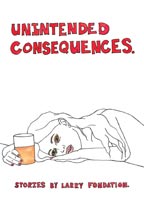
A violent bartering occurs in Larry Fondation's "Hilfiger." Two well-dressed men cross paths in Echo Park. One man wants the other's Rolex. The man who wants to buy the watch offers a price that insults the watch-bearer. The man with the watch refuses to sell it for only fifteen dollars. So the buyer hits him with a baseball bat, ending the negotiation. The buyer does, however, pay the man fifteen dollars. The man wanted a watch. He just wasn't willing to pay anymore than fifteen dollars.
There is a complete portrait painted in such little space. There is atmosphere: the streets wet, the power out because of a storm, the Dodgers for sale. These details help create a Los Angeles rife with uncertainty. And as a lover of crime fiction I look to read about uncertain times in uncertain places. The fact that the buyer pays for the watch is an unexpected and brilliant touch: "He put the watch in one of his own pockets, and, from another he took out a ten dollar bill and a five." This man is a criminal, but he's also going to pay what he promised. He knows not to stick out, and that is illustrated beautifully by this line: "The buyer walked away quickly, but he did not run." Life has unpredictable tendencies and this story reflects that.
Days after reading "Hilfiger" it lingered in my mind. Its images, its criminal with strange morals, its blatant language--they all caused me to revisit the story multiple times. There was an undercurrent I felt while reading "Hilfiger," a feeling that told me everything wasn't right. That feeling had me hanging on to every sentence and every sentence kept surprising me. Part of this effect is due to its construction. This piece is lean; there is no wasted space and there are no punches pulled. Much like the man with the watch, I felt like I was knocked out after reading "Hilfiger." But in a good way, like the way it feels when you read something truly engaging.
About the Author
 Garret Gaudens is in the creative writing MFA program at Rosemont College. He enjoys playwriting and is currently nurturing a love affair with flash fiction.
For further reading, check out FlashFiction.Net's suggested readings of flash fiction and prose poetry collections, anthologies, and craft books, by clicking here.

From gaydegani
October 21, 2010 at 4:44 pm
Thanks for this, Garret, for introducing me to this concise and amazing story that sticks with you, and for breaking down the craft.
From Benjamin Grossman
October 21, 2010 at 10:36 pm
Nice job. I was surprised when the bat came out of nowhere. I, too, like the “lean” style of this piece, which you make a point of focuses in on.
From Joanna Leigh Simon
October 23, 2010 at 2:40 pm
Nice job, Garret. This piece is great for a lot of reasons. I particularly like the inclusion of the fact that the “Dodgers had just been put up for sale.” It really lends a somberness to the tone.
From Katie Baker
October 25, 2010 at 1:20 pm
Awesome piece. It’s nice to hear how engaged you were when reading the story. It is really powerful when each and every word has an impact on the reader. Having every word count is a really important part of flash fiction and I think also the most difficult to figure out.