
Monday
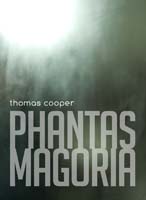
Thomas Cooper's flash fiction collection Phantasmagoria is a gripping compilation of intense short pieces constructed on themes of death and loss. Through these themes, Cooper is able to create an intimate bond with his readers based on basic human emotions, dazzle them with equal parts illusion and fantasy, and leave them speechless with the close of the last page.
One definition of the word "Phantasmagoria" has to do with an invention that projected the images of ghosts or moving specters on walls in the 19th century. In your flash pieces, you create ghostly characters with similarly disembodied spirits who seem to haunt the stories you've created (and in a way, the reader afterward). How did you create such haunting characters? And how do you get them to resonate so intensely with readers even after they've finished your chapbook?
Well, I'm very glad they had this effect on you. That's kind of you to say. I think the otherworldly aspect of the collection is a lot more subdued than some reviews would lead people to believe. There are some surreal elements, sure, but only in several of the stories.
Throughout a majority of your pieces in Phantasmagoria, there is a theme of loss. In the beginning stories especially, we see the repeated death (or impending death) of a wife character. How did you develop this theme? Were you conscious of developing it as you created the pieces or did it seem to develop after the pieces were written?
I didn't consciously develop any theme. I try never to do this. If somehow I find myself slipping into this mode, then I know I'm in trouble. I'll end up with an overwrought piece of crap. Oh, this happens more often than I'd like to admit—much more often—but I prefer to think that I recognize the problem when it occurs.
Your chapbook opens with a piece titled "The Lady in the Closet," which deals with a husband's loss of his wife to cancer. As his wife physically degrades, the woman in the closet becomes a stronger psychological pull to the husband, a distraction and way of coping. How did you create these two female characters and mirror and play them off one another? How did you determine the fate of each character?
When I'm writing a story, I seldom know what I'm doing, or where I'm going. So, no one's fate was predetermined. That wouldn't be too much fun, would it?
My personal favorite piece is "House Tornado." The emotions that are built as the tornado itself brews outside the house make for phenomenal suspense. And the kicker with the wife in the corner desperately whispering I fucking love yous to a mysterious person on the other end of the phone just drove me over the edge. How did you come up with the idea for this piece? And how did you determine that this "twist" with the wife was the most important decision you needed to make for this character?
As a writing teacher, I can say that good ideas are common. But it's rare that these good ideas lead to good stories. An idea doesn't count for much. My creative writing students have terrific ideas, but ultimately they become so carried away with sensational elements, the what-then and what-after-that of a story, that they forget character. They forget that these things are happening to someone. The characters end up being little more than crash test dummies.
So, the idea of a tornado picking up a house: big deal, right? A meteorological event, that's all. Not much more than an anecdote. But what 's happening with the characters inside that house? That is, aside from their being scared shitless?
Did you find it difficult to create a chapbook that dabbled in aspects of horror and fantasy? What influences created this draw to the "other side" for you?
I hope I don't sound contrary when saying this, but I don't consider much of the book horror or fantasy, to be honest. Maybe it's the title, or the cover, that amplifies this impression among readers. There are some fantastic elements, but they're embedded in stories with 'realistic' concerns. Even that sounds pretentious, though. Ultimately, I think these categorizations are specious, because a story is not made horror just because it has a zombie aunt or a mutant bail bondsman.
On the other hand, I grew up as an avid reader of the horror genre. When I was an adolescent, it was all I read. Not only Stephen King and Clive Barker, but just about every obscure and weird-looking book I could find. Ramsey Campbell, August Derleth, H.P. Lovecraft, Joe R. Lansdale, Ray Garton, Ray Bradbury, Robert Bloch, lots of odd things from Arkham House press. I'm sure a little of the genre's influence creeps in now and then.
What most inspires you or draws you to the form of flash fiction? What challenges you the most in creating flash?
Time is the biggest challenge for me. I wish I had more time to write. I capitalize on what little I have, so sometimes I end up going back to flash fiction. I didn't intend to write so many flash fiction pieces, or become associated with the form in any way. Actually, I keep meaning to stop and work on longer stuff. I keep on telling my girlfriend, 'This is the last flash fiction piece I'll ever write. Seriously.' And then she says, 'Yeah, right.'
Michael Martone is quoted on the back cover of Phantasmagoria as describing your flash pieces as "Miniature and domestic, rooms within rooms," a quote that perfectly articulates the essence of what you've created with each flash piece in this chapbook. What advice can you give to other flash fiction writers just starting to understand the art of creating these stories that are "rooms within rooms"?
I think beginning writers assume that since flash fiction is so short that it's somehow a lesser form that's easily mastered. They assume that because they can put a poem or a traditional short story together that the transition will be effortless. They think, 'If I just do what I normally do, but much less of it, then I'll have a short short.' Then they discover this isn't case.
My main advice would be stop thinking in terms of plot. Stop thinking about twists and turns and surprises. Stop trying to shock people, because they've seen it all on the Hallmark channel. Because readers are fewer and fewer, fiction should try to beguile and gratify in other ways.
About the Author

Carrie Hollinshead Capili is currently an MFA in Creative Writing candidate at Rosemont College. She works full time as the Publications Director for a small publishing company in Upper Chichester, Pa, and also moonlights as a freelance writer. In her free time, Carrie enjoys reading, writing fiction, snowboarding, and watching horror movies. She currently lives in West Chester with her husband, Lawrence, two dogs, Maliit and Wickett, and cat, Jo-Jo.

For further reading, check out FlashFiction.Net's suggested readings of flash fiction and prose poetry collections, anthologies, and craft books, by clicking here.

From Mary Beth
November 22, 2010 at 11:34 pm
Carrie, I can’t say that I totally understand all this, but I am very proud of you.
From Aunt Sue
November 23, 2010 at 8:59 am
Very impressive Carrie. And I love your photo!! You go girl!!
From Benjamin Grossman
November 23, 2010 at 10:03 pm
The last question was really interesting. Nice interview.