
Saturday
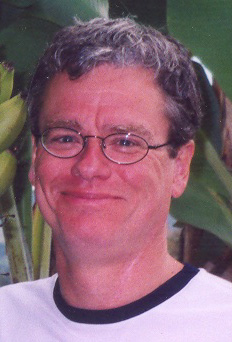 Tom Hazuka received his M.A. in English/creative writing from the University of California at Davis and a Ph.D. from the University of Utah, and is currently a Professor of English at Central Connecticut State University. He has published two novels, The Road to the Island and In the City of the Disappeared, and one book of nonfiction, A Method to March Madness: An Insider's Look at the Final Four (co-written with C.J. Jones). He has also co-edited several short story anthologies, including A Celestial Omnibus: Short Fiction on Faith (Beacon Press, 1997), and Flash Fiction, (W.W. Norton, 1992,) wherein he helped coin the phrase "flash fiction." His essays on flash fiction have been published in the online journal Spark and the textbook Behind the Short Story (Longman, 2005). He also co-edited the 2007 anthology of flash fiction You Have Time For This.
I first discovered Tom Hazuka's writing in the SmokeLong Quarterly archives. His flash piece "Utilitarianism," from Issue 14, was originally published in Quarterly West. "Utilitarianism" is the story of a young man who returns home to find that his parents have taken up taxidermy as a hobby and filled their home with stuffed animals. I loved this story for its brevity, imagery, and successful character sketching despite a satisfyingly low word count. Mr. Hazuka kindly agreed to answer the following questions about writing across genres and why flash is here to stay.
You have written fiction in many forms, including flash, short
stories, and novels. Do you find one more challenging than the others?
Are you drawn to one form more than the others?
I definitely find the novel to be the most challenging form. A novel is such a large undertaking, with no guarantee that you'll manage to write your way out of it successfully--and no guarantee after all that time and effort that you'll even find a publisher. It's the form that involves the greatest leap of faith for the writer, and correspondingly the greatest satisfaction when the work is finally published. That said, I'm not drawn to one form more than another. Flash fiction, short story, novel (and for that matter, memoir)--just as I like to read them all I like to write them all.
Where do you find source material for your work? Do you pull ideas
from your own experiences, or imagine new stories?
Ideas for my stories spring from such a wide variety of sources that I can hardly begin to generalize about them. A bar full of stuffed dead creatures in Knight's Landing, California. Two homeless boys in Santiago, Chile, huddled under a bush on a piece of cardboard. The word "ampersand." A helicopter that landed in the field next to our house when I was a kid. A headless stone angel at a ruined French abbey. I could go on for pages. This statement is fairly accurate, though: I pull ideas from my own experience and use them to imagine new stories.
When did you first start writing flash fiction? What drew you to
want to write flash?
My first flash stories were written as entries for the World's Best Short Short Story Competition at Florida State University. Using Jerome Stern's definition, though, those 250-word stories were technically micro fiction. I became immersed in the form when I co-edited Flash Fiction, which Norton published in 1992. I even tried to write my first novel, The Road to the Island, in chapters that were self-contained flash fiction stories. Eventually that structure became unwieldy and I had to abandon it, though many of the chapters remain very short.
What direction do you feel that flash fiction is heading in? What
place do you think it will hold in the future, particularly as more
literature finds its way online, and digital publishing is becoming
more popular?
Flash fiction is here to stay. Readers love it because the best flash provides the enjoyment of reading a poem and a short story at the same time. Teachers like it because they can do close readings of an entire story, and often several stories, in one class period. Flash fiction can be found all over the Internet, and I think that trend will continue to grow. It's simply a fact that people today are busier than ever, and reading fiction can be crowded out by innumerable other activities. With flash fiction, though, as Mark Budman and I said in the title of our recent flash anthology, You Have Time for This.
About the Author
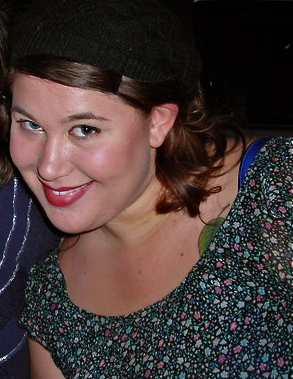
Joanna Leigh Simon is an MFA in Creative Writing (Fiction) candidate at Rosemont College. She has had poems and essays published in Laurel Moon and
Glasses Glasses, and has contributed writing for Public Radio
International. She lives in Philadelphia, and always goes out of her
way to step on a crunchy leaf.

For further reading, check out FlashFiction.Net's suggested readings of flash fiction and prose poetry collections, anthologies, and craft books, by clicking here.
Subscribe to FlashFiction.Net by Email


From Jessica Collins
December 11, 2010 at 11:20 pm
Great interview. I found it really interesting to hear what a writer who writes in so many different genres had to say about flash and why flash has become so popular.