
Thursday
Step One: Slip in unnoticed.
Interesting beginnings tend to begin in the middle of action. Starting with dialogue or in the middle of a physical action will ease the reader into the story without readers even realizing that they have been drawn into the story without prior knowledge of what led up to that moment.
Step Two: Cover your tracks.
Don't backtrack on what you've said in the beginning of the story. You may subtly throw in visual hints or theme references at the start of the story, but you don't necessarily need to keep repeating a single image or theme to beat it into your readers. They will be able to find their way without tracking the author's breadcrumbs.
Step Three: Find weaknesses.
Do your characters have a shadowy past? A quirk? Do your characters have specific fears, passions, etc. about certain subjects? If so, don't be afraid to seek out those character flaws and use them as part of the story.
Step Four: Exploit said weaknesses.
When the weaknesses of the character(s) have been found, or decided upon, exploit them. No story is interesting without conflict, and if weaknesses or flaws are not exploited, there will likely be no conflict. This technique will drive the story until completion. Here's your chance to be a sadist.
Step Five: Execute.
Bring the story to a climax. It doesn't necessarily need to be epic or life-altering in terms of the character(s), but at least make sure the resolution (or lack thereof perhaps) connects back to a character's weakness, personality, etc. Changes can be big or small; it doesn't matter as long as it doesn't occur independent of the character(s).
Step Six: Slip away unnoticed.
Just as you worked your way quietly into the reader's curiosity, slip away before the reader notices what has happened. In other words, don't draw too much attention to your ending. It does not need to be finite and/or possess a blanket statement. Ambiguity is natural and accepted at the end of most short fiction. Ending with action (as you may have started with) could help conclude the piece. Again, the reader does not need a trail left by the author to find out a set-in-stone meaning.
About the Author
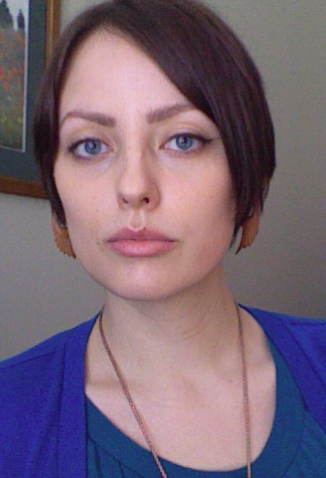 Nichole Beard is a graduate student at Rosemont College in the process of earning her MFA in Creative Writing. She received her BA in Integrative Arts from Penn State University where she published articles for a student-run arts & culture journal. She is currently working on her first novel.
For further reading, check out FlashFiction.Net's suggested readings of flash fiction and prose poetry collections, anthologies, and craft books, by clicking here.
Subscribe to FlashFiction.Net by Email

