
Monday
[Editor's Note: FlashFiction.Net will be publishing tips from Tasha Cotter, one every Monday, for twenty weeks: 1, 2.]
♦
My goal for this series of blog posts is for writers to save themselves a lot of time and frustration. This series is meant to get you on the path toward publication, provided you put in the work of writing and revising. Don't worry if you don't follow all these recommendations--who could? I'll be the first to admit that even I'm guilty of sometimes not using my time wisely--look for my tip on social media! But overall this series contains hard-won truths on how to make writing a bigger part of your life. I hope it clarifies the publishing guidelines, professional etiquette, and protocols you may have been unsure about in the past. More than anything, I hope it puts you on track toward opportunities you may not have imagined.
—Tasha
Twitter: @TashCotter
♦
Tip #3
Get an MFA...if You Want
In the writing world, the decision whether or not to pursue an MFA program is often debated. Creative writing MFA programs are becoming increasingly popular and are very much on the rise. But did you know that many of the twentieth century's greatest writers didn't earn the credential? Writers like Ernest Hemingway, F. Scott Fitzgerald, and Sylvia Plath didn't earn MFA's, but it's easy to see the lasting influence they had on American literature.
But it's also true that the MFA in creative writing has several benefits—at its best it gives the writer the space and in some cases, funding, to write. These programs also provide a built-in community for writers and force those who are admitted to become disciplined about their writing through assignments, close readings, and formal writing and graduation requirements.
As someone who has graduated from an MFA program in Creative Writing, I would encourage prospective applicants to these programs to look closely at what funding is available. Some of the best programs offer stipends, fellowships, and/or assistantships, which is wonderful, but unfortunately pretty rare. The last thing you want to do is receive zero funding and graduate in two years with significant student loan debt, which can easily happen.
And I suppose this brings us to that uncomfortable question of what life is like after the MFA. While it's true that some writers do go on to publish their MFA thesis as their first novel or poetry collection, most do not. Sure, the MFA adds a nice credential to your curriculum vitae, which in itself can open some doors, but nevertheless, writing typically becomes a smaller part of many students' lives. This is just something to keep in mind when considering which programs to apply to and how much debt you are willing to take on for that credential.
I know that after I graduated I missed my small community of writers from my workshop days. I missed their guidance, their perspective, and their critiques. Suddenly I felt like I was completely on my own with my work, and that was both exhilarating and a little scary. For the first time in a long time I was the sole reader and writer; and supposedly my judgment alone could tell me whether the piece at hand had any merit. Writing can be such a personal thing, and I think that any participant in a creative writing workshop can tell you that there's an unmistakable community of trust built and it is within those confines that plots are clarified, poems perfected, and the germ of new stories built.
In short, I'm confident that the MFA was the right way to go—for me, at least. I chose a low-residency option that allowed me to work while taking classes, and it fit my schedule and lifestyle really well. I'm sure I wouldn't have made the time for the amount of reading and writing that was involved, nor would I have met the wide array of writers, editors, and agents I met as a student in the program, if I had tried to re-create the experience on my own.
♦
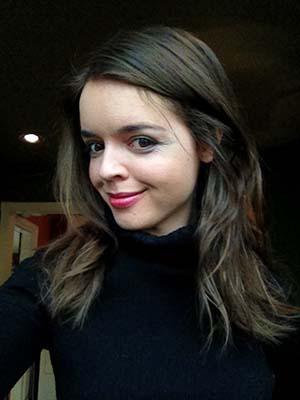
Tasha Cotter, @TashCotter, is a poet and fiction writer based in Lexington, Kentucky. She is the author of two chapbooks of poetry and the full-length collection, Some Churches (Gold Wake Press, 2013). You can find her online at www.tashacotter.com.
