
Tuesday
Below, you
will find Laura Mullen's prose poem "Bride of the Bayou" from the collection Enduring Freedom followed by a craft
discussion.
Bride of
the Bayou
She is drained--that's her word. She takes care
of other people's needs all day long, never thinking of herself, but employing
the various time saving devices developed to expand each task until it
approaches the horizon of the impossible. An entire ecology damaged, possibly
irreparable: where there were birds no bird, and so forth, the grim countdown
of what should be visible. Sticky mud and silence, a tour boat tilted up
against the bank below the reopened bar because there's no longer a reason to
teach anyone anything about this disappearing world. She seemed, once, so wild
and tame, so exactly the right combination of unspoiled and viewable,
adventurous and predictable. Now no one leans over a guardrail to watch the
reflected sky ripple past, alert for the first glance of a lazing reptile in
her shadowed shallows--all that water flowed away through the gates opened to
make her (to development) accessible. Now anyone with money can find their own
purpose for...if they want to: the space opened up by the erasure of wetlands and
wildlife is designated useful. As if the zone of pity and contempt she soon
comes to occupy ("Oh mother, really!!") feeds those around her, who feel safely
outside of that zone? For how long? But this can't be a bride, surely! Weeds
rise in the empty parking lot among "For Sale" signs. "Brides are the focus of
such outpourings of love and joy," one who should know remarks sourly, "but
nobody cares for the newlywed." First it's the high cost of cleaning the dress
and then the problem of finding offspring to admire and resurrect the
age-stiffened silhouette. Use your imagination--recreate among dying trees stuck
in cracked silt the shapes of dead and gone things: etch claws and fins and
scales into earth, cut the sky into wings--agitate stillness. Fasten a slow
unreadable gaze to a rough grayish green slick afloat in the murk. It seems the
bride turns, almost at once, into the wistful, increasingly edgy, wife...on her
way to becoming the more or less gently resentful mother, scrubbing down the
toilet with a wad of filthy lace.[1]
As a
reader, I enjoy being challenged by a piece of writing. Mullen's piece is
certainly challenging: it challenges the reader to think and reflect, not only
on the literal and metaphorical subject matter of the piece - the bride and the
wetlands - but also on craft. Here are some craft elements that stuck out to me
as I read the piece.
·
Overarching
metaphor portrayed as a human character: Mullen uses the metaphor of
the bride to make a statement about the degradation of the wetlands, but she
succeeds in making the bride into a compelling character of her own. The bride
has feelings of exhaustion, pity, and resentfulness. Mullen lets her bride act
and interact with off-screen characters (more on them later), creating, in a
short amount of time, a fully-formed character who is more than just that which
she represents.
·
Disembodied
dialogue to show peripheral characters: We never see the guests at the
wedding who talk to and about the bride, but we hear them through dialogue that
is not attributed. This technique makes it very clear that the bride is the
focus of the story while still allowing her to interact with others and giving
the reader a sense of the attitudes others have towards her.
·
A
narrative created by images stacked on top of each other: The
story of the bride of the Bayou does not have a traditional plot structure.
Instead, Mullen creates a narrative of images that go back and forth between
the bride and what she stands for, between the metaphor and the literal. Mullen
also plays with time, starting in
the "now," when the bride is a housewife who takes care of others, going back
to the "then" when she was a bride, and back to the "now" at the end of the
story. This makes the story almost a stream-of-consciousness narrative and also
adds to its poetic quality.
·
Archetypes:
Another element that adds to both the larger metaphor and the poetic quality of
the piece is Mullen's use of archetypes. In her collection Enduring Freedom, Mullen tells the stories of many different
brides, each used to explore a different aspect of identity, art, and creation.
She takes the bride - a character to whom people will bring their own
associations as well as cultural expectations - and turns her on her head to
explore new ideas. The bride becomes nature, a mother, and mother nature all at
once.
·
Pairing
unexpected words, adjective lists: Throughout the piece, Mullen
carefully picks adjectives to pair up so that the duet of the words creates an
evocative, unexpected image. "Sticky mud and silence," "unspoiled and
viewable," and particularly "agitate stillness" are pairs that stick out to me.
Some of these pairings disagree with each other, like "wild and tame" and
"adventurous and predictable," and others are simply terms that serve to
defamiliarize the reader by making him wonder how they relate at all and
thereby creating a new, unfamiliar image and association in the reader's mind.
Mullen also runs lists of adjectives together, like the "rough grayish green
slick" and the "wistful, increasingly edgy wife" that make the piece that much
more poetic and help to build her images.
Writing
"prose poemy flash" is something I struggle with, so I wanted to see if I could
apply these techniques to create my own piece. Here is my attempt, a piece
called "Abeyance."
Sleeping Beauty rests in her tower, alone, a
monument to abiding. Once upon a time, she was a girl with dreams: of becoming
an astronaut, fireman, king. But she was devoured by the Princess, all pink and
narrow and perfect, and she lay down on the couch to watch Disney movies while
briars scuttled up the sides of her television. "Such a sweet girl, it's a pity
she's not prettier." Sleeping Beauty tries on her mother's makeup, layering
bright pink painterly swathes of lipstick in "Prince's Kiss." She waits for the
boys to ask her to the prom instead of asking them herself ("You just don't do
that!"), and when none of them do, she stays home, listening to the rainy day
mix on her ipod as the briars creep over the front door and into the keyhole.
Sleeping Beauty lies down to wait. No one knows if she dreams. No one asks.
I found
that by following Mullen's example, it was easier for me to get into that
poetic frame of mind while writing prose and agitate that stillness that comes
when I get stuck in my writing. You might want to try these same techniques if
you are working on a prose poemy flash piece.
Works Cited
Mullen,
Laura, "Bride of the Bayou," Enduring
Freedom, (Los Angeles, CA: Otis Books/Seismicity Editions, 2012), 49.
Enduring Freedom published by Otis Books/Seismicity Editions. Here is a link to the website at which the book can be ordered.
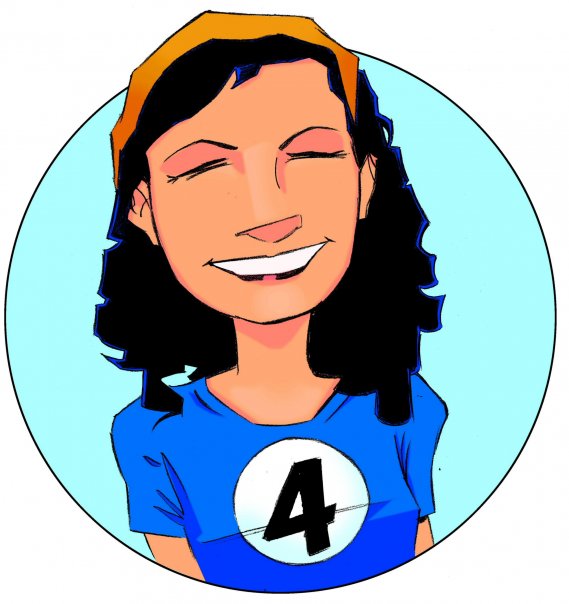 Molly Lazer is an MFA candidate in Creative Writing at Rosemont College. A former associate editor at Marvel Comics, she currently teaches high school, acts, and directs plays outside of Philadelphia. Her work has appeared in The Pennsylvania Gazette and Caesura.
[1] Mullen, Laura, "Bride
of the Bayou," Enduring Freedom, (Los
Angeles, CA: Otis Books/Seismicity Editions, 2012), 49.
