
Tuesday
Dhoti
Jon Sindell
Dad's eightieth birthday was a costume party. I was Maria Von Trapp, my sister hid her annoyance behind Jackie O shades, and Dad's stooped wife, April, wore a burnished-orange sari and a third eye.
Dad was Ghandi, and it wasn't a stretch. His limbs were sticks, for he had cut down to just one meal a day since leaving the university three years before; his head was naturally egg-shaped and bald; his incisive eyes twinkled behind round wire-frames; and his chest showed snowy through his ... uh ...
"Dhoti, daughter."
I knew it, and Frannie knew it, but neither would risk mispronouncing the word for fear of being cut by a grin for our academic underachievement.
"It looks good on you, Father," Frannie said flatly. She had discarded Dad several decades ago and knew that Father vexed. But it didn't today. "Thank you, Frannie," said Dad in a benedictory tone. He dipped his finger in the water-bowl--we were scooping April's runny dal with banana leaves--and anointed Fran's forehead. She choked off a laugh and gaped in shock. Dad lowered his head with a soft inward chuckle.
The next day, my father was Gandhi again. He was Gandhi next week, next month, and next year--all day, every day. Frannie and I drove by and saw Dad outside in his dhoti, sauntering in a weak-legged way to the corner market for lentils and peas. "He's demented," said Frannie with bite, but I noticed myself unconsciously mirroring the grin Dad bestowed on fellow walkers.
Dad was still Gandhi when April died, and soon "nursing home" and "his own good" were Frannie's constant themes. So we sat down with Dad in the light that streamed into his study, illuminating the books he had loved for so long behind a door he had rarely opened to us. These days he merely caressed their covers.
I was the younger, favored child. "Dad," I said. He offered a birdlike hand and I took it. He beamed and offered his free hand to Frannie, but she turned with a pretense of not having noticed. "Dad," I repeated. Dad smiled with wonder, innocence, and grace. Frannie considered this childlike affect further proof of dementia, but I discerned wit deep inside his eyes. And his smile at last was mockery free.
"I can't," I told Frannie. "There are some things you don't do to a mahatma."
Note: Originally published in May 2014, Firewords Quarterly.
Author's Note
"Dhoti" allowed me to utilize two of the advantages of flash, variety and sweep. As for the latter, it may seem paradoxical, but flash is great for conveying the sweep of a lifetime in a few hundred words -- perhaps because it requires you to clear out the clutter and drill down to the essence. Here I've suggested the essence of the lifelong relationship between an old man and his daughters with just a few hints. As for variety, the beauty of flash, for a person like me, is the opportunity to explore countless lives, and to do so from a variety of perspectives, as you write story after story. In this first-person tale, I was a middle-aged woman caring for her aged dad. Maybe I'll be a goldfish next.
As for the content of "Dhoti," I was the principal supervisor of my aging mother's care, so I relate to "Dhoti" that way; but I also have children, and I sometimes project into my own future as an old guy, and wonder how my kids and I will relate. Finally, I liked the idea of a very old person "coming of age."
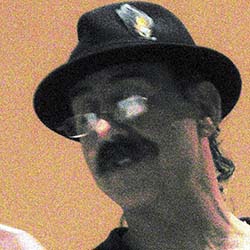 Jon Sindell wrote the flash-fiction collection The Roadkill Collection (Big Table Publishing, 2014) and the long-story collection Family Happiness (2016). He curates the San Francisco-based reading series Rolling Writers and is a fulltime personal humanities tutor. He used to practice law.
